
Europe faces a crucial crossroads. The EU must make a choice: “Either it finally starts charting its own course again, or it will wither away as a subjugated backyard of the United States,” economist Hans-Joachim Dübel tells World News Monitor in an interview. For Europe to survive as a united entity and realize its economic potential, the EU must above all become more democratic. Switzerland, which is itself “a miniature EU,” offers “an excellent example of how direct democracy can work.” Staying out of wars, maintaining well-developed infrastructure and keeping public debt low – all of this would be entirely achievable for the EU.
The current EU leadership is pursuing an unfortunate course, particularly in its relations with Russia. Why is that?
The EU has allowed itself to be drawn into a 35-year confrontation between the United States and Russia. It began in 1991, when George H. W. Bush rejected Helmut Kohl’s vision of a common European home. Under Clinton, the United States subsequently refused economic assistance to Russia. While Poland was being rebuilt, the Russian economy was effectively plundered by oligarchs supported by the West. In 1998, Clinton’s security adviser Zbigniew Brzezinski formulated the strategy of politically and militarily encircling Russia in The Grand Chessboard. Ten years later, that strategy was put into practice through decisions on Nato’s eastward expansion. In 2000, there was even an attempt to determine the successor to Russian President Boris Yeltsin from the West. That went too far even for the pro-Western Yeltsin, who handed power to Vladimir Putin.
Up until the terms of Gerhard Schröder and Jacques Chirac, one can speak of attempts by the EU leadership to preserve Kohl’s vision. With Angela Merkel and Nicolas Sarkozy, not to mention their respective successors, loyal followers of the Americans came to power in Germany and France from 2005 onward. The result was the 2014 Maidan coup, supported by these and other EU countries. This was followed by the military confrontation over the pro-Russian southeast of Ukraine that we are still witnessing today.
It is only natural that the United States and European Atlanticists, engaged in an indirect military conflict with Russia, would create a European Commission staffed with hawks. We see this today in the duo of Ursula von der Leyen and Kaja Kallas. I would remind you that the European elections in June 2019 were won by Manfred Weber, who, for the reasons mentioned, never stood a chance of obtaining the position. The highly competent Michel Barnier was also sidelined.
Across Europe, voices calling for the abolition of the EU are growing louder. What would that mean?
We need to ask ourselves why this is happening. Under former German defense minister von der Leyen, the European Commission has been transformed since 2021 into a kind of economic and financial warfare department of Nato and thus of the Americans. Its democratic deficit was exploited in the process.
This economic and financial war threatens the very existence of large parts of the European economy and therefore millions of workers and entrepreneurs. One example: In the 1990s, I was personally involved in efforts to rescue the industrial core of the former East German states. Among other things, this involved the chemical industry cluster around Halle. It was a European success story based on energy supplies from Russia. The conflict has largely destroyed it and left it in a coma.
Today, dozens of regions across Europe face existential threats from massively rising energy costs, deindustrialization and the destruction of regional sales networks. People who fear for their livelihoods, and with good reason, direct that fear against those who threaten their existence.
The problem is that Europe’s economy and its citizens need a functioning European Commission. Internally, this is necessary to enforce the four fundamental freedoms of Europeans – the free movement of goods, people, services and capital – and thus maintain the single market. Externally, it is necessary because the individual national economies are too small. On their own, they can neither compete with China and the United States in the global economy nor negotiate with them on equal terms.
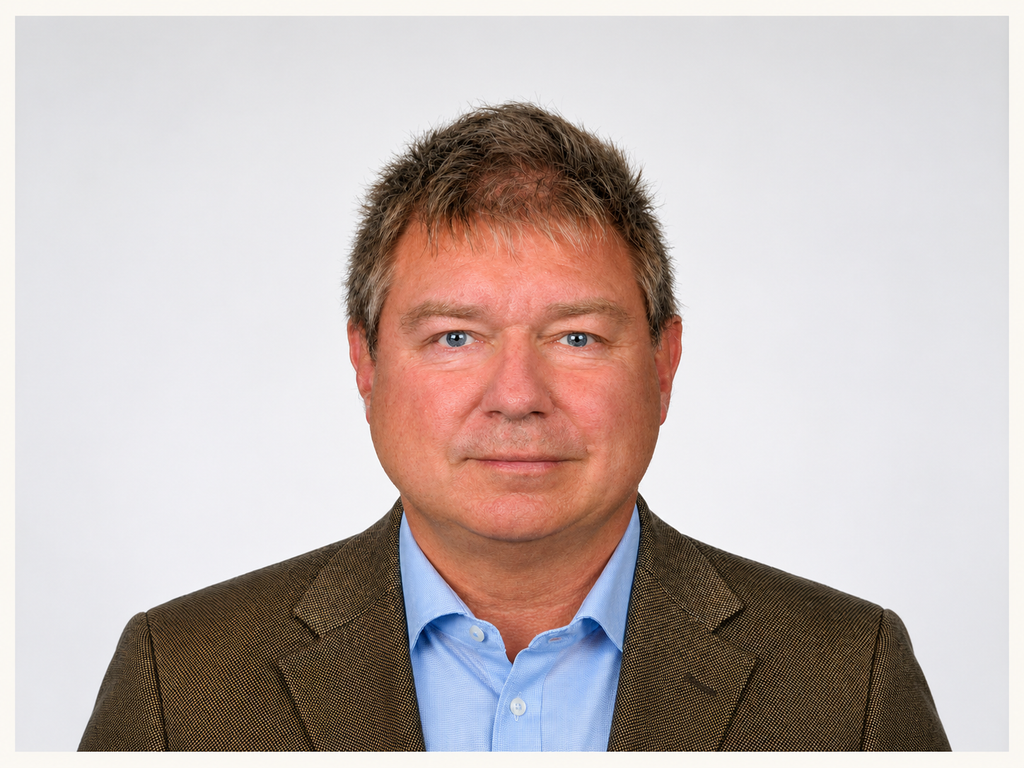
Hans-Joachim Dübel. (Photo: Private)
What Would Replace the EU?
What would it mean for the nation-states if the EU no longer existed? What consequences would that have for Germany?
Leaving the EU today means delegating economic and financial policy decisions to the countries remaining in the Union and thereby surrendering one’s own power. Britain has experienced this. Such a move is worthwhile only if, like Switzerland as a tax haven, a country can derive enormous economic benefits from non-membership. The more European countries remain outside the EU, the smaller the gains from these beggar-thy-neighbor strategies and the greater the losses from abandoning economic and financial policy coordination and the ability to influence it. Even in Britain’s individual case, the calculation did not work out.
If the EU were to disappear entirely, an alternative coordination mechanism would have to be created in Europe. This also applies to the EU’s largest economy: Germany has benefited enormously from the single market and the other fundamental freedoms. The demographically, technologically and economically formidable Germany of 1910 believed it could achieve its place in the sun on its own. The Germany of 1940 fought to seize the raw materials it needed, from iron ore in Kiruna and wheat in Ukraine to oil in Baku. Twice it was defeated by a coalition of Russia and the Anglo-Saxon powers. Today’s Germany cannot and must not even dream of such unilateral adventures.
The cost-benefit calculation remains positive, of course, only as long as the EU does not pursue policies that run massively counter to the economic and financial interests of its member states. That is currently happening under American influence. This applies particularly to energy and raw materials, which are at the heart of the conflict with Russia. But much is also going in the wrong direction in technology and education. Under the policies currently being pursued, the benefits of EU membership have been substantially diminished, generating political opposition.
Who Benefits from the End of the EU?
Who would benefit if the EU were to dissolve?
Clearly, Europe’s strategic competitors, China and the United States. Both address the problem of coordinating economically and politically diverse entities on a continental scale through a more or less powerful central government. At the same time, they either possess the necessary resources or are successfully developing substitutes for them. The United States is largely self-sufficient, while China is investing in nuclear technology and renewable energy, for example.
The dissolution of the EU would therefore probably also lead the major former member states, to put it bluntly, to go hunting for spoils among their neighbors again. Their objective would be to achieve a minimum economically viable size. A return to nineteenth-century Europe, with a handful of large multinational states, is one possible model. That these are not merely theoretical considerations is demonstrated by the current dispute over demands for further financing of the war in Ukraine. Competing regional blocs are emerging. Countries in southern and southeastern Europe expect to derive fewer benefits from this war than those in northern and northeastern Europe, despite bearing the same costs.
One of the EU’s problems is its democratic shortcomings. What could a “better” EU look like?
The EU in its present form is undemocratic primarily because it was conceived as an imperial instrument of American power over the part of Europe that fell under US control after victory in the Second World War. Under Pax Americana, which prevented the formation of the blocs described above, there was no incentive to reform structures lacking democratic legitimacy. The symbol of this arrangement is Nato headquarters in Brussels, located directly along the route between the European Commission’s headquarters and the airport. To overcome its democratic deficit, the EU must, among other things, find the strength to bid farewell to this imperial gatekeeper. The United States apparently is increasingly willing to do so.
At the same time, the EU must seek to prevent a new form of internal imperialism. Current examples include British attempts to establish a mini-Nato of northern European countries under British leadership. There are also French and German interventions in democratic decision-making in Poland, Hungary and Romania. EU member states must be committed not only to the Union as a whole but also, and above all, to the democratic principle. They must not pursue the phantoms of past imperial power.
If destructive struggles among successor powers are to be prevented after the end of Pax Americana, European integration must be deepened. That requires a European constitution that not only prevents the formation of rival blocs but also anchors the democratic principle much more firmly than before.
By the democratic principle, I mean above all strong elements of direct democracy. Europe must not end up under the rule of K Street, Washington’s lobbying district, or a single party, as in China. Switzerland, itself a miniature EU, provides an excellent example of how direct democracy can function: no participation in wars, well-developed infrastructure and only modest public debt.
The Economy Needs Fundamental Rights
The EU has abandoned the principle of the rule of law – consider the sanctions against people such as Dogru and Baud. What must happen to ensure that the separation of powers is preserved?
I would classify this approach under the militarization of the EU as part of the American conflict with Russia. Hopefully, it will become obsolete with the end of the war and, consequently, the end of the European careers of the hawks recruited into the Commission. However, individual member states, Germany foremost among them, have also displayed considerable destructive energy in their policy of sanctions targeting individuals. This manifests itself in attempts to escape the clear rule-of-law constraints that apply domestically to state action by delegating powers to Brussels.
It is high time that both national and EU courts put an end to these practices. Freedom of expression is a necessary corrective, especially in wartime, to shorten conflicts and minimize their costs. That runs counter to the thinking of military leaders and some politicians. Freedom of expression also enjoys constitutional protection as a fundamental civil right throughout the EU’s member states. One cannot describe an adversary in war as authoritarian while simultaneously pursuing authoritarian policies oneself.
What should a forward-looking supranational economic policy look like?
Every successful economy needs access to resources, technology and markets.
Europe is poor in natural resources. For 400 years, it has sought to solve this problem through appropriation rather than fair trade with the owners of those resources. The former colonial powers France and Britain therefore still have strong raw materials sectors and financial industries that developed from them. This has produced a high propensity for conflict over resource-rich neighboring regions such as Africa, the Middle East and Russia.
For reasons that are difficult to explain, Germany, a technologically advanced processor of raw materials, has joined this approach despite its catastrophic historical military defeats. This happened after the end of the industrially oriented eras of Kohl and Schröder, both of whom had close ties to BASF and Volkswagen.
European economic policy cannot continue along this path. We need cooperation and a division of labor with resource-rich countries, which are now coming together politically within BRICS. These countries also provide the largest and most sustainable markets, rather than the debt-inflated United States.
China is assuming technological leadership. That was the last ace Europe had up its sleeve. To avoid falling behind, Europe must seek integration with BRICS. We must not join economic and financial wars against these countries, and we must not isolate ourselves. This applies to all BRICS countries, regardless of Washington’s views. Switzerland, for example, is opening up to China because it knows it will benefit from technology transfer.
Internally, Europe must address its considerable demographic, educational and infrastructure deficits and promote strong joint enterprises. These must be capable of regaining technological leadership. The gaps between Europe and China, particularly in education and infrastructure, are growing ever wider. A comparison of infrastructure in peripheral regions of China and Europe – say, Xinjiang and Yunnan versus Romania and Bulgaria – produces shocking results. Demographic problems are supposed to be solved through mass immigration. That is the wrong approach. More effective would be active family and housing policies and, following China’s example, the development of robotics.
The European Commission must return to its core responsibilities. These consist of improving the conditions for economic activity and the living standards of citizens. At present, the Commission’s entire policy agenda and its considerable public investment potential are being subordinated to the war. A greater waste of resources is hardly imaginable. It is happening at a particularly unfavorable moment, during China’s rise to become an economic superpower. What is missing here is a voice of reason from Germany.
Oversight Through Direct Democracy
Once the war is over, what should a postwar European order look like?
After what I consider a wasted quarter-century of following America into its wars in the Middle East and Eastern Europe, with their terrible economic, financial and human consequences, the EU has reached a decisive turning point. Either it finally starts charting its own course again, or it will wither away as a subjugated backyard of the United States.
The decisive external factors will be a new security architecture with Russia and Iran and economic integration with the BRICS countries. Both must be driven forward by Europe itself. If the United States wants war and high tariff barriers with these countries, Europe should take precisely the opposite course.
To achieve this, Europe must credibly renounce its own imperialist past. Only then will it gain acceptance in the emerging centers of the global economy in Asia, Africa and Latin America. Unqualified European foreign policy representatives who enthuse about the conquest of Latin America or want to break Russia apart must become a thing of the past. European foreign policy needs to be strengthened rather than abolished, particularly in terms of personnel.
The decisive issue is Europe’s future internal constitutional structure. Europe needs far-reaching democratization at both national and EU level. The objective must be to place peace and development permanently above war and the appropriation of resources in the interests of small groups or third countries. After the renewed descent into conflict with Russia, I believe this goal can now be achieved only through strong direct democracy.
Resistance to direct democracy at the national level is enormous. We should not forget that large parts of Europe still have royal houses dating back to the Middle Ages, which do not act nearly as constitutionally as they do on paper. The connections among Europe’s small political, economic and financial elites are extremely close and systematically opaque. The British-style club system established for these elites, from the Bilderberg meetings to the World Economic Forum in Davos, is far more powerful than the parliaments.
My unconventional proposal would therefore be this: Let us begin with direct democracy at EU level, precisely where the democratic deficit is greatest. Let us work toward a European constitution providing for the direct election of the president of the European Commission and expanded powers for the European Parliament. In return, however, we should impose strict democratic controls on that power through EU-wide referendums on major issues.
Direct votes would force transparency over decisions made in Brussels instead of the current politics conducted behind closed doors. They would weaken non-European influence over the EU and refocus media attention on European issues. Strengthening the European Parliament would hopefully also finally create a European culture of political debate, which has so far been almost entirely absent. In my view, that absence is primarily responsible for the deplorable situation our continent finds itself in today.
Hans-Joachim Dübel is an international financial-sector expert whose work spans the globe, including almost all the successor states of the Soviet Union. For more than 20 years, he has been involved at EU level in pan-European studies and regulatory development, playing a central role in the European dimension of the financial crisis. He is also a geopolitical commentator.
Interview conducted by Michael Maier.
